How do we properly set the time of pneumatic ejecting of products?
How do we properly set the time of pneumatic ejecting of products?
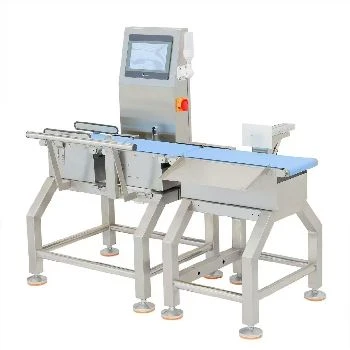
If an ejector misses a product, it's not always the software delay. Equally important are the actual speed of the strap, valve response, cylinder movement and detection time.
Pneumatic exhaust usually receives an order only after the control system has established that the product is not suitable. Between the moment of measurement and the position of the ejection, transport time occurs. The controller must take into account the speed, distance and delay of mechanical components and maintain the connection to the exact right product.
Step by step procedure
- Measure the distance. Specify the position of the reference detection of the product, measuring range and ejector. Describe clearly to which sensor the time equation refers.
- Measure the speed of the product. At approximately constant speed, use the measured tape speed. If slips or accelerations occur, use an encoder or other positional tracking.
- Calculate the initial transport time. The basic rule is t = distance / speed. If the distance is 0,30 m and the speed is 0,50 m/s, the transport time is approximately 0,60 s. This is not yet the final delay of the order.
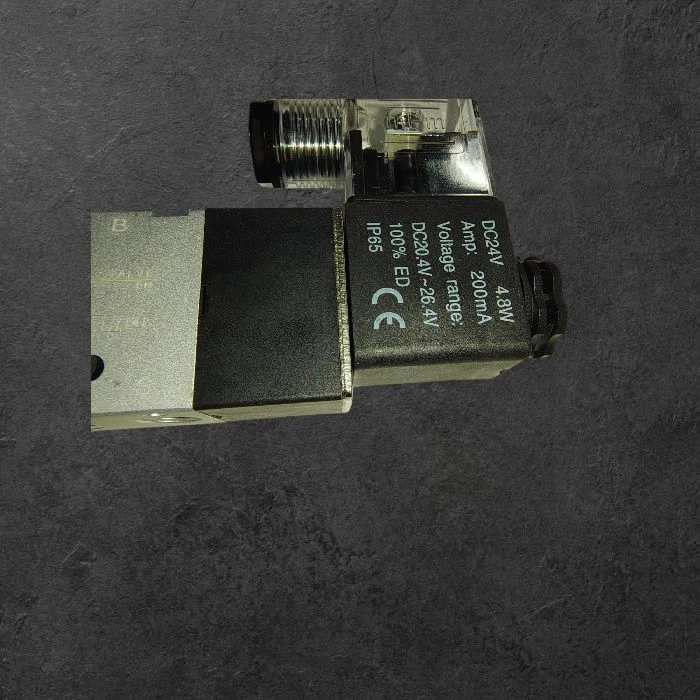
- Measure valve and cylinder response. The time to actual contact with the product includes electromagnetic valve response, pressure, flow, tube length and mechanical movement.
- Set pulse duration. The valve must remain activated until the cylinder safely performs the walk and returns without undue interference with the following product.
- Activate product tracking. With multiple products between sensor and ejector, you need a series of decisions or positional tracking to reject the correct piece.
- Perform reproducible tests. Perform dozens of transitions at different speeds and different product intervals. Measure the accuracy of the ejector and unacceptable false rejections.
- Check for error behavior. Determine what happens when the valve, sensor, air or control communication fails. In critical cases, the system shall be stopped safely.
What does the positive or negative delay correction mean?
A program delay often means when a valve is turned on by the sensor. If the ejection is performed too late, all time components should be checked, not just blindly reducing time. The wrong setting can hit the next product.
Why is the quality of compressed air important?
Too low pressure, leaking pipes or blocked regulator may prolong cylinder response. First stabilize the tire, then calibrate the times. Mechanical failure shall not be resolved by increasing pulse duration indefinitely.
Example of validation in production
Prepare e.g. ten marked pieces, of which a few NOK, and try several consecutive cycles. For each round, check that only the intended piece is thrown out and record the delay, speed and number of errors. If the valve, hose or pressure changes, repeat the test.
Most common errors
- Calculating time based on nominal engine speed instead of product speed.
- Non-respected mechanical response of valve and cylinder.
- There is no type of decision for several simultaneously present products.
- The ejection pulse intervenes into the next product.
- The delay is changing instead of eliminating discomfort or vibration.
How He Can Help You Svet Črnil?
If the automatic ejector on your line is insecure, we can scan the sensor-controller-ventilinder route in the Black Council. Send distances, tape speed, valve model and operating image; prepare baseline setting and dynamic test procedure.
Expert resource: SMC — Pneumatic fixings, tubing and operating scenarios. Always check the product specification and conditions of use.