Andreshtajn bakes a blanket with a battery-operated motor
Andreshtajn bakes a pig: from a small engine to a large gathering
Brief summary: Andrejštajn assembles the drive for barbecue, uses the car battery and lets the engine rotate slowly. In the meantime, the roast rotates nicely, and at the table it smells like good food and sounds like an accordion. To show 24 V engine use 12 V battery with the appropriate 24 V converter. We need to check the torque, load, bearings and cooling for the actual device.
The video is an illustrious AI animation generated by a local video generator. It shows the idea and the atmosphere, not the measured test of the engine or the confirmed load capacity of the barbecue. The musical basis is the original synthesised regiment with the sound of accordion.
Engine spins, bearing bearings
In design, I first separate two tasks. The weight of the roast and roast bear a stable bearing bracket. The engine delivers torque through an appropriate coupling or additional transmission. I don't hang a heavy roast directly on the output shaft of a small reducer! The engine support shall be firm, the axles shall be aligned and the rotating parts and couplings shall be secured against touch.
I fix the roast in such a way that it does not move down the shaft and is as balanced as possible. The cutting and all parts in contact with food must be made of suitable food contact materials and allow cleaning. The engine, cables and battery stand outside the hot zone, behind the heat shield and protected against fat and water.
How to connect car battery and 24 V engine
The item shown has a rated voltage of 24 V DC. The standard 12 V car battery is therefore connected through a converter that increases the voltage to 24 V. The direct connection to 12 V does not provide a nominal speed, starting torque or reliable start-up under load.
- Before wiring, disconnect the battery and check the polarity of the engine and converter.
- As close as possible to the battery, install a fuse selected according to the conductors and verified system consumption.
- Install an accessible main switch or emergency switch. The converter and any regulator must withstand the starting current and inductive load of the engine.
- Use appropriate conductors, secured connectors and cable relief. Battery clamps are covered; the battery is stable and ventilated.
- First we test the empty mechanism, then gradually increase the load. We monitor current, heating and evenness of rotation.
Energy path: 12 V battery → fuse and main off → converter 12 V to 24 V → proper control → 24 V motor. For 12 V version converter to 24 V release. The shutdown must break the drive reliably. The value of the fuse, the cross section of the conductors and the power of the converter is determined only from verified data of the specific engine.
One turn per minute and multi-turn versions
At 1 RPM, one turn lasts approximately a minute. This is a slow starting point for the idea shown; the actual speed is chosen according to the design and test. The RPM marking shall describe the engine output under the specified conditions, not being provided under any load.
| Tender version | Power supply | What does it mean for a barbecue plan |
|---|---|---|
| 24 V / 1 RPM | 24 V DC; at 12 V battery suitable converter | Slow output speed; check available sustained torque and heating. |
| 12 V / 3 or 5 RPM | 12 V DC with protection | Possible slow version; final speed and load are confirmed by test. |
| 12 V / 10, 12, 20, 30 or 55 RPM | 12 V DC with protection | For similar slow rotation, additional mechanical transfer is planned. PWM may supplement, not replace torque and cooling checks. |
| 12 V / 100 or 170 RPM; 24 V / 200 RPM | Voltage must correspond to the selected execution | A significant further speed reduction is required; the direct drive of the slow barbecue shown is not suitable. |
| Industrial 12 V / 60 W / 220 RPM | 12 V DC, different current and control | Second construction family. It needs its own carrier, verified additional reducer and separate dimensioning; the attached model JGY-370 does not apply to it. |
The ratio of the additional reducer is estimated as the engine speed divided by the desired grill speed. Example: 20 RPM on the engine and 2 RPM on the barbecue mean a ratio of 10:1. The choice also takes into account the efficiency, the permissible torque of the transmission and its mechanical protection.
The torque is not the same as the permissible weight of the roast
The 95 kg torque code in the product title does not have the specified lever and is not a complete torque unit. We cannot assume from it that the engine can spin a 95 kg weight of a pig. To recalculate, we need a certified sustained torque in Nm or clearly stated unit and data on the work cycle.
The primary contribution of imbalance is M = m × g × e. For an illustrator load of 20 kg and a 10 mm centre of gravity deviation of approximately 1.96 Nm. This does not include friction, start-up, additional forces or backup. The 50 mm deviation would increase the same contribution to around 9,81 Nm. Good balance is therefore essential.
Snail transmission may limit the reverse rotation, but self-prisonability is not used as a substitute for a mechanical guard. The properties are checked for concrete implementation. Before interfering with the mechanism, we always disconnect the power supply.
From the first test to a pleasant picnic
| Problem | Measure | Benefit |
|---|---|---|
| Engine Hard to Start | Let's check the power supply, start-up current, balancing and the required gear ratio. | A more reliable start without long-term engine stall. |
| The Rag Rotates Unevenly | Align the bearings, relieve the motor shaft and attach the load symmetrically. | More calm rotation and less shocks in transmission. |
| The drive is warming up | We move it away from the grill, check the current and reduce the mechanical load. | Lower engine thermal load and electronics. |
| Speed is too high | Select a slower execution or additional reductor. | It is easier to achieve the desired slow rotation. |
During baking, we control the fire and the device, use clean accessories and use a suitable injection thermometer to check the heat treatment in the thickest parts. The appearance of burned skin does not in itself confirm food safety. Harmonics and good associations come up when the food machine and preparation are properly cared for.
3D tour engine and digital package for 1 €
For the Family JGY-370 gLB preview and separate ZIP with STEP, OBJ, MTL, STL and description of dimensions and editing composition of STEP. Digital price ZIP-package 1,00 € with VAT- Physical engine not on.
The model is a reconstruction of the exterior by photographs. The nominal dimensions are partly summarised from the quoted photos related to the 12 V / 55 RPM version; other details are estimated. The dimensions are not confirmed on the physical product. Check the engine, shaft, threads and gaping holes before designing a tight fit or making a carrier. Internal gears aren't reconstructed. The same display does not mean the same electrical parameters of all versions.
Open 3D view and offer digital package · View displayed 24 V engine · View 12 V version with 3 RPM
Next time, you're gonna be spinning a barbecue, or you're gonna be working a motorcycle, and you're gonna enjoy good company?
Drive correction: side shaft coupling
The output shaft of the JGY-370 engine is at the side of the reduction device, perpendicular to the axis of the cylinder engine. Install an appropriate cloven-hoofed coupling on this shaft, followed by bearings supported by a barbecue axis or additional transmission. The corrected 3D model shows this orientation.
Universal DC regulator allows speed adjustment in the useful engine range. It does not replace the converter 12 V to 24 V and does not increase the engine from 1 RPM above its base capacity. Before use, check voltage, start current and cooling.
Elastomeric coupling may reduce some thrusts in the transmission. The results are selected by actual shafts; for the 6 mm motor shaft and 8 mm drive axle, the example is 6 → 8 mm. Performance 10 → 12 mm is not a direct substitute. The effect on wear depends on the overall composition.
Related products and 3D packages
- 12 V engine with snail, 55 RPM · 3D View and Digital Package
- Universal DC regulator up to 20 A · 3D View and Digital Package
- Parking coupling D30L35, holes 6 and 8 mm · 3D View and Digital Package
- Parking coupling D30L35, holes 10 and 12 mm · 3D View and Digital Package
Version 10 → 12 mm is for a different shaft. For an engine with a 6 mm output shaft and an 8 mm drive axle, select 6 → 8 mm. Related products represent design options; the connection itself does not confirm mechanical or electrical compatibility.
Further documentation
- St Andrew's ghost: engine, regulator and birch coupling
- Andrew's Ghost 1: Engine construction and side shaft
- Andrew's Ghost 2: Controller and Coupling
- Andrew's Ghost 3: Theatre Story and Movement Control
- Presentation of DC engines with reducer snail
- DC engine with reduction device 5-100 RPM 3V-24V
Frequently Asked Questions
- Where's the engine output shaft with the JGY-370 snail reductor?
- Does the PWM regulator change the engine from 1 RPM to a fast engine?
- How does an elastic joint insert help protect the reducer?
- Does the coupling of 10 to 12 mm correspond to the engine shaft of 6 mm?
- What happens if we remove the rubber cartridge from the ungulate joint?
- How can I regulate DC engine speed?
- Can I put my own birch hook together?
Additional documentation
-
 Look
St Andrew's ghost: engine, regulator and birch coupling
-
 Look
Andrew's Ghost 1: Engine construction and side shaft
-
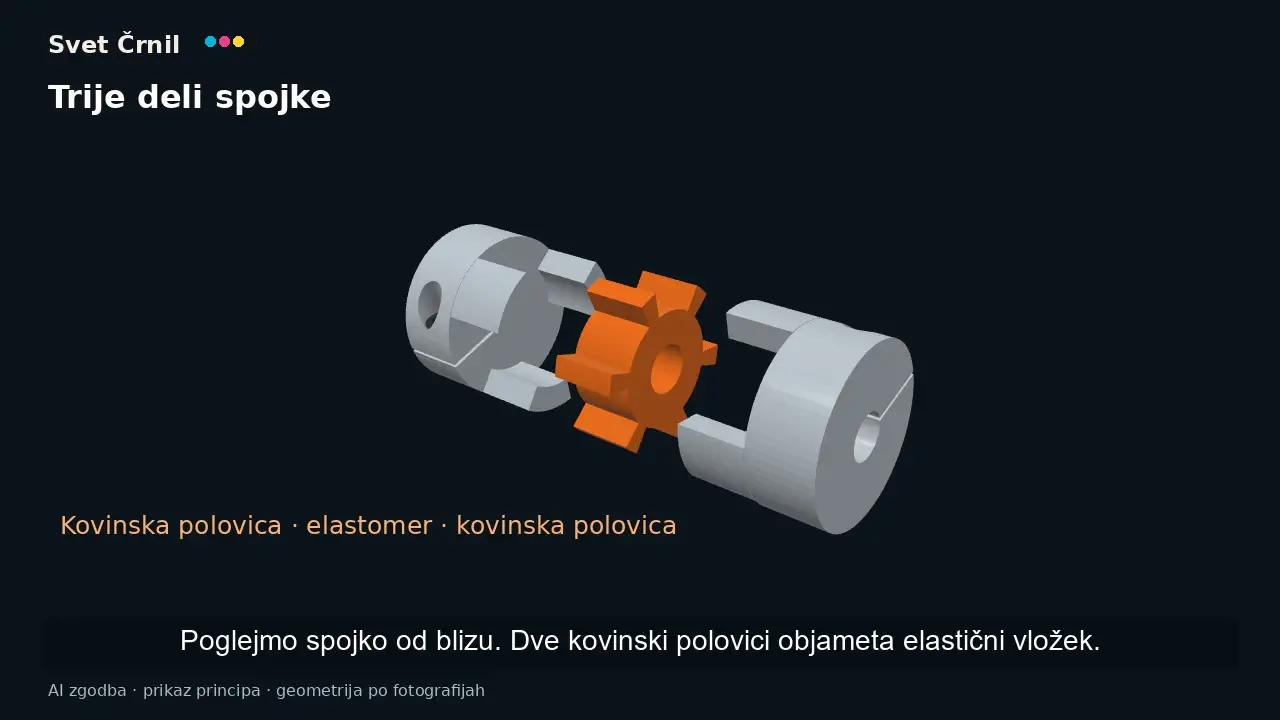 Look
Andrew's Ghost 2: Controller and Coupling
-
 Look
Andrew's Ghost 3: Theatre Story and Movement Control
-
 Look
Predstavitev DC motorjev z reduktorjem polžem
-
 Look
DC motor z reduktorjem 5-100 RPM 3V-24V
Related FAQs
-
 Kako lahko reguliram hitrost DC motorja?
-
 Ali lahko sestavim svojo poljubno parkljasto spojko ?
- Where's the engine output shaft with the JGY-370 snail reductor?
- Does the PWM regulator change the engine from 1 RPM to a fast engine?
- How does an elastic joint insert help protect the reducer?
- Does the coupling of 10 to 12 mm correspond to the engine shaft of 6 mm?
- What happens if we remove the rubber cartridge from the ungulate joint?