AC and DC engines, VFD and regulators: Frequently Asked Questions
What's the difference between AC and DC engine?
The AC engine shall be designed for adequate AC power supply and DC engine shall be designed for adequate DC power supply. In addition to voltage, the engine type is important in the choice of steering: single-phase and three-phase AC engines and brush DC, BLDC and step motors do not have the same requirements.
What does VFD mean and how does it change speed?
VFD is a frequency converter. Input AC converts voltage to DC and then creates output AC voltage with adjustable frequency and voltage for compatible engine. It also allows you to adjust acceleration and stopping.
Does 25 Hz mean half the speed of 50 Hz?
With the same induction engine and the same reducer, it's about yes. Actual spins also depend on slip and load. An example in the video illustrates the principle; it does not represent the measurement of a specific product.
When is the additional motor capacitor not needed?
For an appropriate three-phase engine powered by a compatible VFD with a three-phase output. For example: VFD with 230 V single-phase input and 230 V three-phase output may supply a properly coupled and suitable three-phase engine for this voltage. The converter itself creates three phases. This rule does not apply to any single phase condenser engine.
Can I remove the capacitor from the single phase 220 V motor?
Not on the basis of a general explanation of the VFD. The single phase capacitor engine needs the required binding and the appropriate regulator. The usual three-phase VFD is not a general replacement. The instructions of the specific engine and converter must be checked; their documentation shall be valid for specialised single-phase propulsion.
Are all AC engines shown operating with the VFD shown?
The compatibility of all combinations shown is not confirmed. AC sets may have a dedicated regulator and capacitor engine. Before buying, we align the number of phases, voltage of windings, binding, current and allowed frequency range.
Does VFD increase engine power at lower speeds?
No. No. VFD does not increase rated power. In the case of slow rotation, check the permissible sustained torque, current and cooling; if necessary, select a more suitable reducing device or engine.
What do I get from the reductor?
Lower output speed and higher available torque at transmission losses. The rated power shall not be increased. Select the appropriate ratio, permissible torque and beam loads.
When's the DC engine with the reductionr more convenient?
For small mechanisms, robots and battery power, a brush DC engine with a reductionr can be a practical solution. The engine, power supply and regulator shall comply with the required voltage, starting current, load and duty cycle.
Is the universal DC regulator suitable for each DC engine?
No. No. Displayed regulator 10-60 V and up to 20 A is for suitable brush DC engines. BLDC and track motors need appropriate other drivers. Also check the current at start-up and cooling of the regulator.
Does the torque mark in kilograms indicate the permissible load mass?
No. No. A kilogram without the specified lever is not a complete torque unit. To select, we need a confirmed torque in Nm or a clearly stated unit, the geometry of the mechanism and the work cycle. The heavier the load is not equated with the engine torque.
What information do you need to choose?
What moves, desired speed, load and torque, duration of operation, power supply and mounting space. For an existing engine, send a photo of the title plate and a link to the regulator.
Video and complete guide
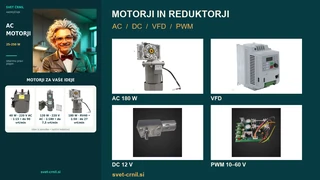
Andrejštajn: AC and DC engines, reducers and VFD
Related products
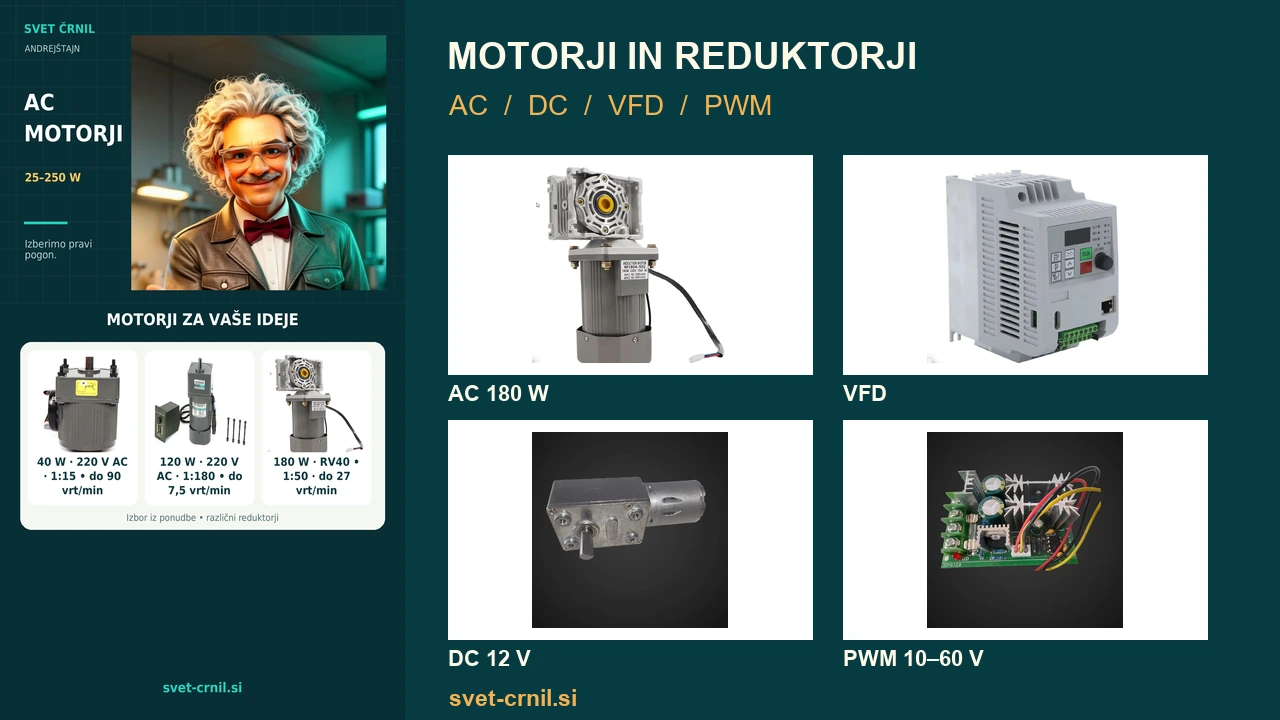
- AC motor 40 W, 220 V, reduction factor 1:15, up to 90 rpm
- AC engine 120 W, 220 V, reduction factor 1:180, up to 7,5 rpm
- AC engine 180 W with reducer RV40, 1:50, up to 27 rpm
- Frequency converter VFD 1,5 kW, input 230 V
- DC engine with reducer, 12 V / 55 rpm
- DC engine with reducer, 12 V / 20 rpm
- DC engine with reducer, 12 V / 3 r/min
- DC engine with reducer, 24 V / 200 rpm
- Universal speed regulator DC engine, 10-60 V, up to 20 A
Published:
Related products
-
 Small engine with reducer 40W 1:15K 90 RPM with regulator
-
 Induction engine with reducer and regulator 7.5 RPM 120W 220V
-
 Engine with semi-trailer reduction device RV40 AC220V 1:50 180W
-
 Frequency inverter VFD 1.5kW 230V AC One-phase
-
 Engine with snail 12V DC 55RPM 25kg torque locking drive
-
 Engine with snail 12V DC 20RPM 40kg torque locking drive
-
 Engine with snail 12V DC 3RPM 90kg torque locking drive
-
 Engine with snail 24V DC 200RPM 5kg torque locking drive
-
 Universal speed regulator DC engine up to 20A